 In his classic study Postmodernism, or, The Cultural Logic of Late Capitalism (1991), Fredric Jameson argues that cyberpunk represents “the supreme literary expression if not of postmodenrism, then of late capitalism itself” (419 n1). Indeed, cyberpunk has become one of the most significant and influential sub-genres of science fiction to develop in the past three decades. Its focus upon the computerization of society, the attendant rise of the society of control, and the increased power of global corporations mark it, as Jameson points out, as a genre that explores the core of postmodern, late capitalist society. For Jameson, postmodern refers to cultural period and late capitalist indicates the economic era. Of course, as Marxist critics like Jameson maintain, economic forces serve as a the base of a society upon which the superstructure of culture is erected. Cyberpunk is a distinctly postmodern manifestation of science fiction that depicts virtual reality experiences, cyborg bodies, computer networks, global corporations, etc. In many ways, it is a direct interrogation of what philosopher Jean-Francois Lyotard called “the hegemony of computers” in his famous book The Postmodern Condition (1979). Lyotard argues that knowledge undergoes a transformation in the postmodern era—it loses value in itself and becomes transformed into information, a commodity that can be bought and sold. Hence, as society becomes increasingly computerized, society begins to only privilege knowledge which can be translated into computer data, into demographics and statistics. Cyberpunk often depicts dramas surrounding information housing, theft, and retrieval, but the genre goes further than Lyotard by imagining how all aspects of humanity, including consciousness, can be translated into digital form and transferred into the network. The genre’s origins can be traced back through the history of 20th century science fiction literature and film through the various depictions of robots, cyborgs, and computers, and a brief history of such works will help position Blade Runner (1982) and Ghost in the Shell (1995) in a distinct lineage of science fiction.
The word robot first appeared in Czeck author Karel Capek’s play  R.U.R.: Rossum’s Universal Robots (1921). Capek’s play concerns a factory that begins manufacturing artificial people that the play calls “robots.” Today, the world “robot” conjures images of unthinking automatons or inhuman machines that run on cold logic. But Capek’s robots are closer to androids or cyborgs—they look and act like normal human beings. As the play progresses, the robots end up revolting against their human inventors, a theme that has continued to appear in sci-fi up until the present.
 Since Capek’s R.U.R., the history of science fiction literature and film has been replete with depictions of robots, androids, cyborgs, computers, neural networks, and other forms of artificial intelligence. But two pre-cyberpunk authors deserve particular mention: Isaac Asimov and Philip K. Dick. Without a doubt, American science fiction author Isaac Asimov’s Robot Series still represents one of the most influential collections of robot tales. Comprised of numerous short stories and novels, Asimov’s Robot Series later merged with his Foundation novels to create one massive universal history that spans several millennia. Asimov’s Robot Series was kicked off by a series of stories concerning positronic robots
 that appeared in science fiction magazines and that were later collected together in the anthology I, Robot (1950). Almost completely unlike the 2004 Will Smith film of the same name, Asimov’s I, Robot does not represent a coherent narrative but is rather a series of independent short stories strung together by a loose frame story. The stories developed a concept that still influences fiction about robots and artificial intelligence to this day: the Three Laws of Robotics. The Three Laws are as follows:
- A robot may not injure a human being or, through inaction, allow a human being to come to harm.
- A robot must obey any orders given to it by human beings, except where such orders would conflict with the First Law.
- A robot must protect its own existence as long as such protection does not conflict with the First or Second Law.
 The self-referential nature of the laws demonstrates how the laws are ranked hierarchically, and Asimov’s I, Robot stories deal with the interactions between robots and humans and the logical conundrums that arise for the robots as they attempt to navigate their world according to these three commandments. The same laws would appear in numerous subsequent science fiction novels, stories, and films by different authors and directors. For example, Robby the Robot from Fred Wilcox’s classic Forbidden Planet (1956) operates according to Asimov’s three rules.

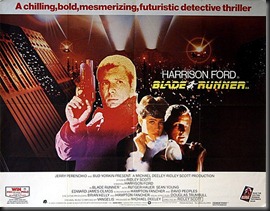
 Philip K. Dick took depictions of robots, cyborgs, and other human simulacra to new heights in his various novels that used beings with artificial intelligence to examine the limits of humanity, the potential for machines to be human, and the perhaps even more disturbing premise that humans might be nothing more than machines. Dick remains most famous for his novel Do Androids Dream of Electric Sheep? (1968), the novel that provided the inspiration for Ridley Scott’s Blade Runner—Scott actually took the title of the film from the 1979 William S. Burroughs novella that has no relation to the film.
  Dick’s Electric Sheep and Scott’s Blade Runner represent distinct texts that should be examined on their own terms. They both feature the same plot concerning a man hunting down rogue replicants, cyborgs who have human intelligence, emotion, and appearance. Scott turns Dick’s satirical story into a brooding neo-noir sci-fi drama, but Dick’s novel—like most of his work—harbors a comedic edge that uses androids to satirize humankind’s belief that they are special, that they are the centers of existence and the apex of the evolutionary ladder. Dick’s novel dehumanizes humanity by not only
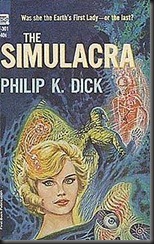
  depicting the humanity of the androids but also by pointing out the mechinization of the human through devices such as the mood organ and the empathy box. The mood organ allows individuals to program their emotion for the day—they can program themselves to be anything from businesslike to depressed. Yes, you can choose to experience a day of black depression if you so desire. Furthermore, the citizens in Electric Sheep take part in a religion known as Mercerism, which requires them to use Empathy Boxes that allow them to collectively experience the sufferings of Wilbur Mercer. Mercer’s life consists mostly of the Sisyphean task of eternally climbing a bmountain. Hence, in this world—an in ours—androids become like humans and humans steadily lose their humanity. Dick would explore similar themes in other novels such as We Can Build You (1972) and The Simulacra (1964), both of which feature mechanical humanoids with artificial intelligence.

While the birth of cyberpunk genre proper cannot be entirely attributed to William Gibson, his novel Neuromancer (1984) undoubtedly remains the most influential work in the genre. Neuromancer takes place in Gibson’s “Sprawl Universe,” which he had already introduced in a series of short stories that appeared in Omni magazine. The “Sprawl” stories were later collected in a volume entitled Burning Chrome (1986), and Gibson went on to publish his genre-altering “Sprawl Trilogy”: Neuormancer, Count Zero (1986), and Mona Lisa Overdrive (1988). Set in the not-too-distant future, the “Sprawl” stories and novels depict a world in which cities have spread out and engulfed their surrounding environs and in which information has become the hottest commodity of the day. Corporations house their information in computers, which are connected together via a network known as “the matrix.” Because of this depiction, Gibson receives credit for envisioning the Internet and coining the term “cyberspace.” Hackers are able to break through corporate defense mechanisms and retrieve valuable information. Gibson’s series
 also features cyborg characters who have electively altered their bodies with enhanced replacement eyes, razor fingers, etc. Additionally, the novel develops the concept of digitizing one’s personality and housing it digitally after death, a theme that Philip K. Dick had already explored in his classic novel Ubik (1969). Numerous other cyberpunk authors cropped up in the 1980s and1990s including Bruce Sterling, Pat Cadigan, and Neal Stephenson. In particular, Neal Stephenson has represented a significant influence on the genre of science fiction since the early 90s. Stephenson blends the postmodern, satirical aesthetic of Thomas Pynchon, John Barth, Don DeLillo, etc. together with cyberpunk themes to create a heady mix of satire, sci-fi
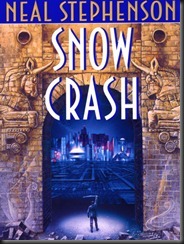 wonder, and literary complexity. His novel Snow Crash (1992) has had a lasting impact on the genre of study of science fiction. The novel depicts a near future in which individuals can insert themselves into an entire digital world via virtual avatars, and it concerns the release of a computer virus in the real world that can infect the brains of users who witness it. Hence, the novel explores how humans have become computerized, how our brains have been altered on such a fundamental level that computer programs can achieve access to our brains across the barrier of flesh. Ghost in the Shell develops similar themes with its inclusion of cyber-brains, which allow users to directly access the net via their brain and to communicate almost telepathically with others but which also harbor the danger of one’s brain being hacked and one’s self (or “ghost”) as the film calls it being erased and replaced.

As we have discussed in class, we as a society seem to harbor an almost irrational fear about robots and artificial intelligence, a fear that has undoubtedly been inculcated in us by science fiction cinema. Without a doubt, James Cameron's The Terminator (1984) remains one of the most classic cinematic tales of dystopian robot oppression. Aside from Piranha 2: The Spawning (1981), the sequel to the 1978 Roger-Corman-produced cult classic that Cameron has subsequently disowned, The Terminator represents the first real James Cameron film. If you are somehow unfamiliar with The  Terminator, it concerns a future in which computers have taken control of the world and enforced their regime of power via nuclear weapons and robot warriors (or terminators, as they are called). But, in the future, a revolutionary hero named John Connor arises to lead a revolt against the machines. In order to forestall the revolution, the computers send a terminator back into the past to kill John Connor’s mother. This
 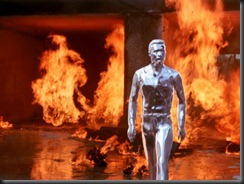 terminator represents a new model that is clothed in human tissue (a cyborg) that looks like Arnold Schwarzenegger. Gritty, brutal, and almost nihilistic, The Terminator combines time travel together with cyberpunk themes to generate a terrifyingly dystopic vision not just of the future but of the then present-day Los Angeles of the 1980s. Like so many cyborg tales—including Blade Runner—The Terminator is not just a film about the possibility of machines rising up against humanity; it is also a film about humanity itself. As the sci-fi/action plot of the film develops, a subtler love story also begins to blossom between the two human protagonists (John Connor’s father and mother) who share a single evening of love during their attempts to evade and destroy the terminator. Their love seems to be what marks humans as different than machines, but in James Carmeron’s sequel Terminator 2: Judgment Day (1991), we witness that terminators can develop emotions or at least be programmed for commitment and fidelity in a way that mimics human love. The Terminator has been followed by numerous sequels, comic book spin-offs, and a television series in which both evil and good cyborgs begin travel through time in a battle for control of the future.
 Japanese cinema also began to develop concepts of the posthuman and the cyborg in works that today would be deemed “cyberpunk.” In particular, Katsuhiro Otomo’s manga series Akira (1982-1990) and its film adaptation had a lasting influence upon cyberpunk, anime, and the entire science fiction genre. While Akira (1988) does not exactly feature cyborgs, computers, or other cyberpunk tropes, its punk aesthetic and posthuman themes had a lasting influence upon cyberpunk and science fiction in general. The manga series and the film differ radically, so I will focus on the film for the sake of brevity. Akira concerns a dystopian
 future in which the original Tokyo was destroyed in a bizarre explosion and in which a new city—Neo-Tokyo—has been built upon the ashes. Neo Tokyo is plagued by biker gangs and terrorists. Against this background, a group of bikers encounters a strange child on a freeway one evening. One of the
  bikers, Tetsuo, almost hits the child and his bike explodes. He is subsequently hauled away by a secret, black ops government group who begin running tests on him to detect psychic abilities. Tetsuo begins developing almost omnipotent powers of telepathy and telekinesis. As the film progresses, his power increases to the point where he begins to lose bodily form and absorb everything surrounding him. Tetsuo becomes an image of both the posthuman and the cyborg—he is an image of the human reduced to pure mind and energy, a post-body human that joins with the universal flow of energy. Featuring elements of body horror and metaphysical examinations of identity and the universe, Akira represents one of numerous attempts by science-fiction to imagine humanity’s evolutionary future. Cyberpunk
  inevitably depicts the computer as the tool that will lead humanity forward to embrace its evolutionary potential. This future evolutionary leap often entails a consequent loss of bodily form and a reincarnation in a state of pure consciousness, pure energy, or in another state of matter. Such evolutionary futures often also depict the merging of human consciousnesses into a
  collective, gestalt entity. For other examples of such speculative evolutions, see Arthur C. Clarke’s Childhood’s End (1953), Stanley Kubrick’s 2001: A Space Odyssey (1968), Greg Bear’s Blood Music (1985), Octavia Butler’s “Xenogenesis Trilogy” (Dawn [1987], Adulthood Rites [1988]. and Imago [1989]) or “Patternist” series (Patternmaster [1976]. Mind of my Mind [1977], Survivor [1978]. Wild Seed (1980), and Clay’s Ark [1984], Hideaki Anno’s anime series Neon Genesis Evangelion (1995-1996). Ryutaro Nakamura’s anime series Serial Experiments Lain (1998).


 Our second cyborg film, Mamoru Oshii’s Ghost in the Shell (1995), is based on Masamune Shirow’s manga of the same name—Shirow published three volumes of the manga in 1989, 2002, and 2003. The film gave birth to a sequel that was perhaps even more acclaimed than the original, further manga series, an anime television series, and an anime television movie. Both Oshii and Shirow are iconic figures in the world of manga and anime. Shirow also wrote such anime, cyberpunk classics as Appleseed (1985-89) and Dominion (1986), which was the inspiration for the
 ![lum[5]](https://blogger.googleusercontent.com/img/b/R29vZ2xl/AVvXsEiczwoZwDXRgRvR56JxuMswFTmcP-6fW63SSsmYxAI8Q34lrAAH9iKD_aLMkYtnpvqGcyIl0OTUVQqGsy02i8lqBvImiV8U1_C98qrIkBz-caplbPkLCIuf4ynW7vaEajEDTkchdjFqf-s/?imgmax=800 "lum[5]") anime series Dominion: Tank Police (1988-89). Mamoru Oshii has become a major force in Japanese science fiction cinema, both in anime and live-action film. From directing numerous episodes of the classic anime series Urusei Yatsura (1978-87; or Lum as it was translated in the United States) to helming his own films like Avalon (2001), Oshii has created a diverse filmmography that attests to his brilliance across the cinematic medium.
anime series Dominion: Tank Police (1988-89). Mamoru Oshii has become a major force in Japanese science fiction cinema, both in anime and live-action film. From directing numerous episodes of the classic anime series Urusei Yatsura (1978-87; or Lum as it was translated in the United States) to helming his own films like Avalon (2001), Oshii has created a diverse filmmography that attests to his brilliance across the cinematic medium.


 Japanese cinema has also created numerous films that combine the body horror genre fully with cyberpunk to create bizarre blends of science fiction, horror, and gore, some of which feature experimental styles and some of which are just b-level genre fare. The most famous example of this hybrid version of cyberpunk remains Shinya Tsukamoto’s Tetsuo: The Iron Man (1989), a bizarre, low-budget, experimental film about a man who transforms into
  a walking scrap heap. Visually unnerving, Tetsuo became a cult classic, was followed by two sequels, and influenced later films like Yudai Yomaguchi’s Meatball Machine (2005) about a young woman who is transformed into a biomechanical being after encountering an alien technology. Meatball Machine still maintains a striking aesthetic, but recent years have also seen the rise of gore-drenched, hyper-sexualized, cyberpunk/body horror hybrids that use the tropes of the genre not to explore the
  epistemological and ontological questions of their forebears but for pure titillation. Films like Naboru Iguchi’s The Machine Girl (2008), Yoshihiro Nishimura’s Tokyo Gore Police (2008), and Naoyuki Tomomatsu’s Maid-Droid (2009) include vast amounts of gore, soft-core sex, and sexy cyborg action, but never develop along the intellectual lines of Blade Runner or Ghost in the Shell. Prolific, Japanese, transgressive auteur Takashi Miike (Audition [1999], Ichi the Killer [2001], Visitor Q [2001], Gozu [2003], and Sukiyaki Western Django [2007]) turned the genre to comic effect in his film Full Metal Yakuza (1997), which plays like a Japanese parody of Paul Verhoeven’s Robocop (1987). Finally, the
 genre has been pushed into truly transgressive space by Taiwanese-American visual artist and experimental filmmaker Shu Lea Cheang’s I.K.U. (2001), which was advertised as a “Japanese Sci-Fi Porn Feature.” Inspired by Blade Runner, the film features pornographic sex scenes as a means of attacking Japanese censorship. The film’s title comes from the slang word “iku,” which literally means “I’m coming.” The film concerns shape-shifting cyborgs that seduce subjects and collect data from subjects at the moment of orgasm. I.K.U. was the first pornographic film to ever be screened at the Sundance film festival. While not all of these are great films, they do demonstrate how the images of the cyborg and the posthuman have infiltrated pop culture on a fundamental level.


 Indeed, two films from the last twelve years demonstrate how the themes of cyberpunk have become fundamentally hard-wired into our culture to the point where such films can become mega-blockbusters. In 1999, Andy and Larry (now Lana) Wachowski released their cyberpunk thriller entitled The Matrix, which depicted a hacker named Neo who discovers that his entire world is an illusion. In reality,
 computers and robots rule the earth and keep humans as prisoners who serve as their batteries. The humans are plugged into the matrix, a computer simulation that the humans believe to be their life on earth. Despite its heady sci-fi themes, the film became a major success and led to two sequels: The Matrix Reloaded (2003) and The Matrix Revolutions (2003). In 2010, Christopher Nolan released an even more heady, complex, and convoluted film about the nature of reality. His film, Inception, concerns dream thieves who are capable of infilitrating one’s dreams to receive information and even implant ideas, both of which are classic sci-fi themes. Despite its depressing, surrealistic, and often hard-to-follow plot, Inception became one of the big hits and most talked about films of 2010.
 Before our screening Tuesday night, Charles brought up the comparison that his high school teacher had made between Blade Runner and The Matrix with Plato’s “Allegory of the Cave” from Book VII of The Republic (c. 380 BC). As I was watching Blade Runner, this seemed like a genuinely though-provoking comparison that could lead us to discuss invisible truths, perceptions of reality, concepts of the universe and identity, etc. If you’re not familiar with the “Allegory of the Cave,” I highly suggest reading it. It’s short and can be found here: http://www.historyguide.org/intellect/allegory.html. Also, in case you are interested, In Blade Runner, when Roy and Leon visit the eye doctor, Roy enters with a misquotation from William Blake’s America: A Prophecy
  (1793). Roy states, “Fiery the angels fell; deep thunder rolled around their shores; burning with the fires of Orc.” The original line is “Fiery the angels rose, and as they rose deep thunder roll’d. Around their shores: burning with the fires of Orc.” Roy’s allusion to Blake’s poem seems to juxtapose him with Orc, the regenerative hero of Blake’s poem, but his misquotation in which he describes the angels as falling instead of rising recalls Lucifer and John Milton’s Paradise Lost. Indeed, the scene in which Roy literally meets his maker, Tyrell, recalls the scene from Mary Shelley’s Frankenstein in which the creature meets his father Victor Frankenstein. Like the creature, Roy was created by Tyrell against the natural order of things, and he lives his life on Earth as a pariah. The comparison to the creature further draws us back to Milton’s depiction of Satan because Frankenstein’s monster identifies with Milton’s epic poem and its depiction of Lucifer’s fall. Finally, I will indulge in a somewhat narcissistic moment by pointing out that I discuss William Gibson, Ghost in the Shell and our next two films (Primer [2004] and La jetee [1962]) in my dissertation, “Variables of the Human: Theoretical Utopianisms and Heterotopian Science Fictions,” which you can access online through the library if you are interested in such things: http://dc.lib.unc.edu/cdm4/item_viewer.php?CISOROOT=/etd&CISOPTR=3084. The chapter on anime has been published separately as an article in the journal Intertexts.


![lum[5]](https://blogger.googleusercontent.com/img/b/R29vZ2xl/AVvXsEie0ODV-7obc8s9aA3Zw5qFw8btzRrEWVoYiDaXDKO2zkZ3KqMloSTtb1N5r33WSD2l8ErSW0YovklOqXzAzm33QMQ_1qA-8GMawlV0W3qNhc1n1mIpaZD6vkgIXqjKm6DjWqbRZA9sqBU/s1600-h/lum%5B5%5D.jpg "lum[5]")


